
 By
Commercial properties depend on electricity for almost everything: lifts, air-conditioning, lighting, security systems, tenant operations and life safety equipment. When the supply fails, the effect is immediate and often expensive. Planned electrical maintenance helps prevent these failures by focusing attention on the parts of the system most likely to cause trouble. This article outlines the key areas that building owners and facility managers should monitor in office towers, retail malls, hotels and mixed-use developments.
The Incoming Supply and HT Switchgear
Larger commercial buildings in Singapore usually take supply at high tension and step it down through their own substations. The HT switchgear, protection relays and associated cables form the first link in the chain. Faults here can affect the entire building. Regular servicing, protection relay testing and condition monitoring, such as partial discharge checks, help identify developing problems in insulation or connections before they lead to an outage. Protection relays that have not been tested for years may not operate as designed, so a fault that should be isolated locally can take down the whole building instead.
Transformers
Transformers convert the incoming high-tension supply to the low voltage used in the building. Oil-filled units need oil quality and dissolved gas analysis to detect internal faults, while cast resin transformers need visual inspection, cleaning and thermal checks. Overheating, unusual noise or vibration and oil leaks are warning signs. Since transformer replacement can involve long lead times, early detection of deterioration is particularly valuable. Load records help here too, since a transformer running close to its rating for long periods ages faster than one with spare capacity.
Main Switchboards and Distribution Boards
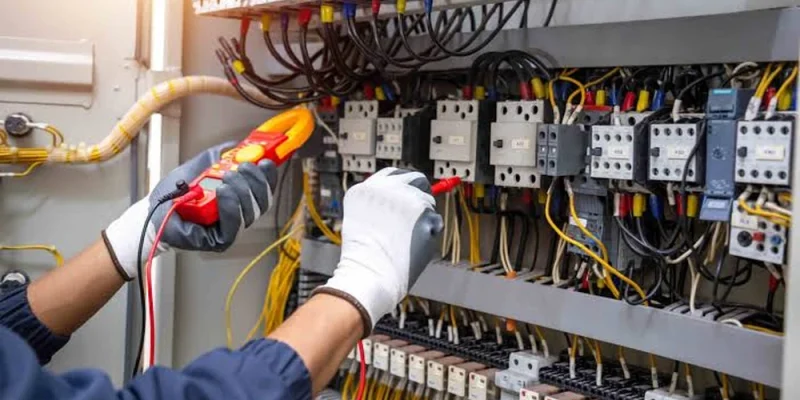
The main switchboard distributes power throughout the building, and distribution boards feed individual floors, tenants and systems. Loose connections, overloaded circuits and deteriorating breakers are common issues. Key points to monitor include:
- Hot spots at busbar and cable connections
- Breaker operation and tripping history
- Signs of dust, moisture or pest intrusion
- Load balance across phases
Thermal imaging is especially useful here, since many faults show up as heat first.
Standby Generators and Automatic Transfer
Many commercial buildings rely on standby generators to keep essential services running during outages. A generator that fails to start when needed is a serious risk. Regular test runs under load, fuel quality checks, battery checks and inspection of the automatic transfer switch are essential. These tests should simulate real conditions as closely as possible, so problems are found during planned tests rather than during an actual power failure. Record each test run, including start time, load carried and any alarms, so that gradual deterioration is easy to spot.
Uninterruptible Power Supplies
UPS systems protect sensitive equipment such as servers, security systems and building management systems from brief interruptions. Batteries degrade over time and are a common point of failure. Battery testing, thermal checks and capacity assessments help confirm that the UPS will perform when required. Replacement should be planned before batteries reach the end of their expected life. Ambient temperature matters a great deal, since batteries kept in a hot room lose life much faster than those in a cooled space.
Lighting and Emergency Lighting
General lighting affects comfort and tenant satisfaction, while emergency lighting is a life safety requirement. Emergency lights and exit signs should be tested regularly to confirm they operate for the required duration on battery power. Failed fittings should be replaced promptly. As part of broader electrical maintenance, lighting circuits should also be checked for overloading, especially where tenants have added equipment. Keep a simple log of each test, noting any fittings that failed and when they were replaced.
Earthing and Protection Systems
Proper earthing protects people and equipment from electrical faults. Earth resistance should be tested periodically, and earth connections inspected for corrosion or damage. Residual current devices should be tested to confirm they trip as designed. Lightning protection systems on tall buildings also need periodic inspection. These systems are easily overlooked because they are not used daily, yet they are essential for safety. Results should be recorded and compared over time, since a gradual rise in earth resistance can indicate corrosion below ground.
Tenant Installations and Load Growth
In commercial properties, tenants often add equipment, change fit-outs or increase their electrical load over time. This can overload circuits or create unbalanced loads. Monitoring tenant installations, reviewing load changes and ensuring tenant works comply with standards helps protect the building’s overall system. Clear procedures for tenant electrical works reduce the risk of problems spreading to shared infrastructure. Periodic load surveys at the main switchboard show whether spare capacity is shrinking and when upgrades should be planned.
Switchrooms and Environmental Conditions
The condition of switchrooms affects equipment reliability. Facility teams should check for:
- Adequate ventilation and cooling
- Absence of water leaks or condensation
- Clean, dust-free surroundings
- Clear access and no stored materials
Poor conditions accelerate deterioration and can create safety hazards.
Building a Monitoring Plan
Monitoring these key areas helps commercial properties avoid disruptions, protect tenants and meet regulatory requirements. A structured plan combines regular inspection, testing and condition monitoring across the whole installation. For buildings that need expert support, a provider of commercial electrical maintenance works in Singapore can help set up and carry out a monitoring programme suited to the property. Start with the areas whose failure would affect the most occupants, then extend the plan outward.









Comments